Is Juvelook Legit? Sculptra vs Juvelook, Baby Collagen, and the Foreigner Price for Collagen Boosters in Seoul

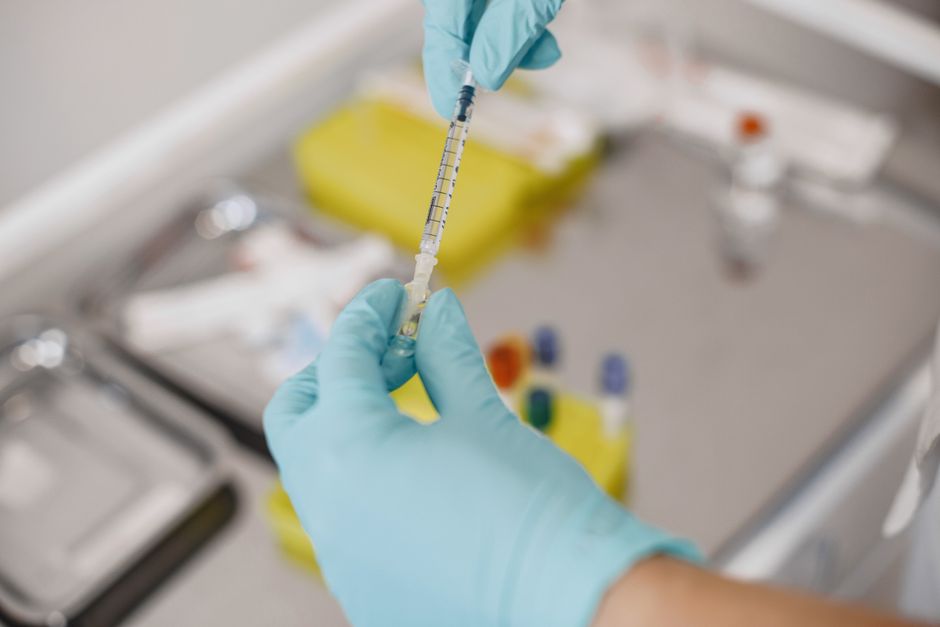
Photo: Unsplash / Handy Wicaksono
Here is the search you probably just ran: "is Juvelook legit," then "Sculptra Korea price," then some Reddit thread where one person swears it remade their skin and the next says they got hard lumps four months later. You're trying to work out whether the collagen booster everyone flies to Seoul for is real, whether it's just filler with a better name, and whether you're about to pay the foreigner price for it. Those are the right questions. Let me walk you through what these injections actually are and what to check before one goes into your face.

A biostimulator isn't a filler — it builds your own collagen
Sculptra and Juvelook do not work the way hyaluronic acid filler does. Filler sits in a line or a hollow and plumps it that day. These are tiny particles your body reads as a mild irritant, and over weeks your skin lays down new collagen around them. Galderma's Sculptra is poly-L-lactic acid (PLLA), and it's not new — the FDA approved it in 2004 for HIV-related facial fat loss, then for cosmetic use in 2009. The Korea hype is recent; the molecule is twenty years old.
The catch nobody puts on the booking page: it's slow. Most people see real change at two to four weeks and peak collagen around the six-month mark. So if a clinic promises you an instant lift the day of, either they're overselling, or they're injecting it under-diluted like a filler — and that is exactly where the lumps come from.
Sculptra vs Juvelook vs Rejuran — stop lumping them together
Clinics quote these like they're interchangeable. They aren't.
- Sculptra (PLLA, by Galderma): the original collagen stimulator. Goes deeper, more structural — for overall volume loss, the "my whole face looks deflated" complaint. Slow build, usually a course of two to three sessions.
- Juvelook (PDLLA + non-crosslinked HA, made by VAIM in Seoul): the newer hybrid everyone's asking about. The HA gives a little immediate plumping; the PDLLA microparticles stimulate collagen over months. Injected shallower as a "skin booster" for texture, fine lines, and glass-skin glow. The nickname you'll see is "baby collagen" — that's marketing, not a different molecule.
- Rejuran (salmon-DNA polynucleotide): the one people confuse with the two above, and it's a different category entirely. It's a healer — barrier repair, hydration, calming — not really a collagen-volume builder. If you came in researching Rejuran, read our separate guide on it; the swaps and the price math there are their own story.
Knowing which one you're being sold matters, because the slow ones and the healer get priced as if they do the same job, and they don't.
The reconstitution problem — the one Sculptra question that actually matters
This is the part I most want a foreigner to understand. Sculptra doesn't arrive ready in a syringe. It's a powder that has to be mixed with sterile water and left to hydrate before it's injected, and the amount of water and the wait time are the whole safety story.
The early protocol used 3–4 mL and a two-hour wait, and people got papules and nodules. The field moved to higher dilution — 8–9 mL for the face — and longer hydration, often 24–72 hours, and the lump rate dropped. There's a documented inverse relationship: more dilution, fewer nodules. So the question to ask out loud is: "How much are you diluting it, and how long was it hydrated?" A clinic mixing it thick and shooting it the same hour to save time is the clinic that leaves you with bumps.
And here's the 10,000-km problem. Sculptra nodules typically surface one to fourteen months after the last injection — long after you've flown home. That's how a polished, English-speaking clinic can still leave you feeling botched from across an ocean.
Is Juvelook even legit? The FDA-vs-MFDS reality
Short answer: it's a real, approved product — in Korea. Juvelook is approved by Korea's MFDS (the Korean FDA) and CE-marked in Europe. What it is not, as of 2026, is FDA-cleared in the United States — it's still in US clinical trials. That isn't a red flag; it's part of the actual reason people fly for it.
But it changes two things for you. You can't get it touched up at home, and if something goes wrong, your dermatologist back home may have never handled it. So treat it like any injectable: ask to see the actual box and the MFDS label before it's drawn up, the same way you'd check a filler brand.
How much it costs — Korean price, US price, and where the foreigner rate creeps
These are market reference points, not a Kuratio quote.
- In Seoul, Sculptra runs roughly ₩400,000–600,000 per vial (about $300–450) at a dermatology clinic. In the US, the same vial is typically $700–1,000, and a full course runs $3,000–6,000.
- Most faces take two to three vials of Sculptra per session, across a course of two to three sessions. Juvelook is sold per session and also done as a course of about three, a month apart.
So yes, Korea is genuinely cheaper per vial. But your bill is per-vial times vials times sessions, and that multiplication is exactly where a clinic pads it. The foreigner rate rarely shows up as a scary sticker — it shows up as "you need three vials" when two would do, or a round per-session price with no vial count attached. Ask for the per-vial price and the vial count in writing. If they won't itemize, that's your answer.

You can't finish a course in one trip
Because these build over months, one syringe on a Tuesday isn't the treatment — the course is. Sculptra is usually two to three sessions about a month apart; Juvelook is much the same. You are not fitting three monthly sessions into one Seoul trip.
Realistic options: do one or two sessions in Korea and the rest with a local injector at home — that works for Sculptra, which is sold in the US, and is harder for Juvelook, which isn't — or plan a return. Anyone telling you a single visit "does it all" is selling you filler-style dilution, not a biostimulator course. Build the timeline before you build the itinerary.
The questions that tell you the injector is careful
- Who is actually injecting — a board-certified dermatologist (피부과 전문의), or a coordinator-booked shadow hand you haven't met?
- For Sculptra: how diluted, how long hydrated, and how many vials for my face?
- Can I see the real box — Galderma's Sculptra, or VAIM's Juvelook — before it's drawn up?
- What's the per-vial or per-session price, itemized, in writing?
- What happens if I get a nodule after I've flown home, and who do I message?
A careful clinic answers all five without flinching. A factory clinic gets vague on the dilution and the price — and that vagueness is the whole tell.

Who it's actually for (and who should skip)
These are for gradual collagen loss and overall skin quality — not for a sharp line you want gone today (that's filler), and not for a sagging jowl that needs lifting (that's threads or surgery). If you want one dramatic before-and-after from a single trip, you'll be disappointed; if you're playing a long game on skin quality and you're honest with yourself about a multi-month build, they're among the better-evidenced injectables out there. Whether it's worth it is hit or miss entirely on that expectation gap.
We orient you to the right clinic tier and the right questions. What actually goes into your face — and how much — is the treating dermatologist's call, not ours.
Talk to Kuratio: tell us what you're considering on WhatsApp and we'll come back with vetted clinic options and an itemized quote — no markup, no commission.
Kuratio is not a medical provider. All clinical decisions are made by the treating physician at the partner clinic. This guide is general information, not medical advice.