Is Laser Hair Removal in Korea Worth It? The Foreigner Price, the Session Math, and the Right Laser for Your Skin

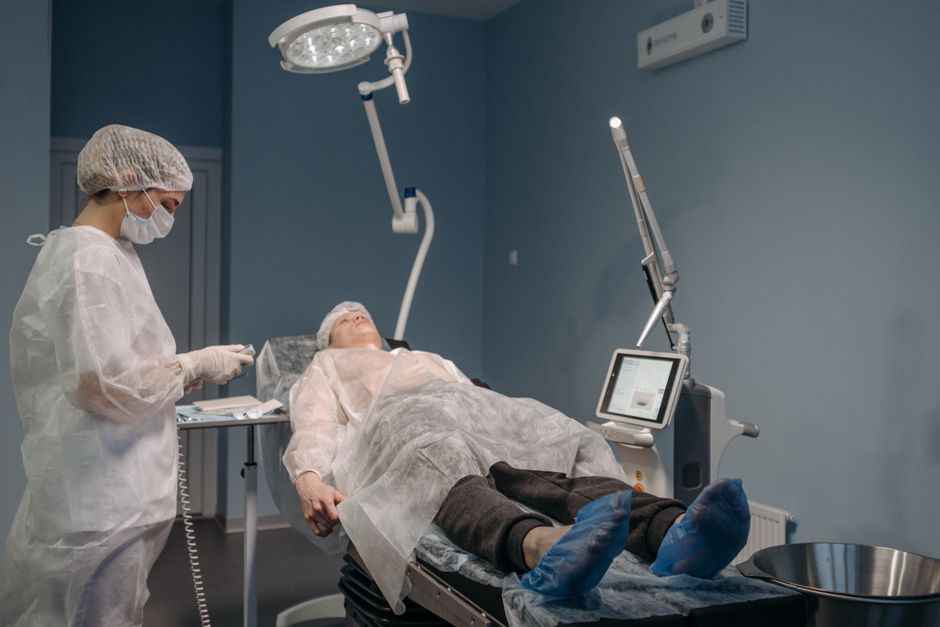
Photo: Unsplash / Daniel Bernard
You have probably already seen the ads — a Seoul clinic offering five underarm sessions for the price of a coffee, sitting next to a glossy place quoting "permanent" full-body packages. So the question in your head is the right one: is the cheap one a factory clinic running a loss leader, is the expensive one just charging the foreigner price, and does any of it actually work, or is it hit or miss like everything else you've been reading about? Let me walk you through what's real.

How cheap is it really, and why the ₩10,000 underarm is bait
Hair removal — 제모 (jemo) — is genuinely cheap in Korea, cheaper than almost anywhere. A small area like upper lip or chin runs about ₩30,000–80,000 a session; underarms roughly ₩50,000–150,000; full arms or legs ₩150,000–400,000. Compare that to the US, where one full-leg session averages around $397 and a Brazilian around $241, with a complete plan landing somewhere between $1,500 and $4,000. The gap is real.
The ₩10,000 underarm — or the "5 sessions for ₩20,000" some clinics advertise — is a different animal. That's a loss leader. The clinic isn't making money on your armpit; it's getting you into the chair so a counselor can sell you a ₩2,000,000 full-body package while you're warm. That's not automatically a scam, but it tells you how the place runs. And watch the foreigner price creep: a clinic that quotes you in dollars, or hands you a "package" with no per-session breakdown, is a clinic where the number can move.
"Laser" or IPL? Check this before anything else
The first swap to catch: some places put "laser hair removal" on the menu and run an IPL machine. IPL — intense pulsed light — is not a laser. It's a broad spectrum of light, weaker and less targeted, and it needs more sessions for less result, especially on coarse or darker hair. It isn't dangerous; it's just oversold as something it isn't.
So ask for the device name. A real hair-removal laser has a model you can look up: a Candela GentleMax Pro, an Alma Soprano, a Lutronic Clarity II. "Our own machine," or "a German laser" with no model attached, is a flag — the same machine-substitution game you see with the bigger-name devices in Apgujeong.

The right laser for your skin is not the cheapest line on the menu
This is the part that actually matters for safety, and it's where foreigners get burned — sometimes literally. A hair laser works by heating the dark pigment in the follicle. The whole trick is doing that without cooking the pigment in your skin. Which laser they reach for should depend on your skin tone:
- Alexandrite, 755nm — strong on light to olive skin (Fitzpatrick I–III). Fast and effective, but not the one for darker skin.
- Nd:YAG, 1064nm — penetrates deeper and mostly skips the melanin in your skin, which makes it the safer choice for brown and Black skin (Fitzpatrick IV–VI).
- Diode, around 810nm — the middle ground, a workhorse for coarse body hair.
A clinic built for Korean skin defaults to alexandrite settings. If you're darker-skinned and nobody mentions switching to the Nd:YAG or doing a patch test first, walk. The good news: the better devices are dual-wavelength. The GentleMax Pro carries both the alexandrite and the Nd:YAG, and the Clarity II — built by Lutronic, a Korean device maker out in Goyang — fires 755 and 1064 from one handpiece. So a careful clinic can match the laser to you in the same room. The real question is whether they bother to.
"Permanent" is a word the biology doesn't support
Any clinic promising permanent removal is selling you a feeling, not a result. Hair grows in cycles, and a laser only kills a follicle that's in its active growth phase on the day you're treated — which is exactly why one session never finishes the job. Realistically you're looking at 6–8 sessions for about 80% reduction, spaced 4–6 weeks apart, and hormonal areas — face, underarms, bikini — often need 10–12. After that, maintenance every 6–12 months, because hormones and aging wake up dormant follicles. The honest phrase is "long-term reduction," not "permanent."
Two groups should set expectations before paying. If your hair is blonde, red, grey or white, there's almost no pigment for the laser to grab, and it mostly won't work — electrolysis is the tool for that, not laser. And if you have PCOS or another hormonal driver, laser knocks down the bulk but doesn't touch the cause, so some regrowth is just part of the deal.
So is it worth flying for?
Here I'll be straight with you, even though it isn't the salesy answer. Laser hair removal is a series spread over months. You cannot complete a 6–8 session course in one Seoul trip, and flying back and forth for armpits makes no financial sense. So as the single reason to come to Korea, no — it isn't worth it.
As an add-on, it's a different story. If you're already here for an executive checkup or skin work and you've got a free afternoon, the price is genuinely good and the device quality at a real dermatology clinic is high. Start the course here, write down the exact protocol and wavelengths they used, and continue with a clinic at home on the same settings. That's the way it actually pays off — which is also why I'd never tell you to build a whole trip around it.

What to ask before you book
- What's the exact device and model? You want a name you can search — GentleMax Pro, Soprano, Clarity II — not "our laser."
- Is this a laser or IPL? Don't accept "same thing." It isn't.
- For my skin tone, which wavelength are you using, and will you patch-test first? Non-negotiable if you're Fitzpatrick IV–VI.
- How many sessions is this quote, and what's the per-session price — not just the package number?
- Who actually operates the device — a doctor, or a nurse under supervision?
- What reduction should I realistically expect, and what does maintenance look like after?
A clinic that answers these plainly is one I'd let near my skin. A clinic that pivots every answer back to a "today-only package price" is one I'd leave.
Talk to Kuratio: tell us what you're considering on WhatsApp and we'll come back with vetted clinic options and an itemized quote — no markup, no commission.
Kuratio is not a medical provider. All clinical decisions are made by the treating physician at the partner clinic. This guide is general information, not medical advice.